
Okay, so check this out—I’ve been juggling wallets for years. Really. MetaMask, a nervy Ledger setup, a handful of mobile apps…it was messy. My instinct said there had to be a better middle ground: desktop convenience with hardware-level safety and smart transaction controls. Something felt off about signing blind. Whoa—yeah, that moment when you realize you just approved a poorly formed contract call. Not great.
At first I thought one more extension would be overkill. But then I installed rabby wallet and things changed—slowly, then suddenly. The UX is crisp without being dumbed down. The transaction simulation feature? Game changer. My gut said “finally,” and my brain went to work verifying why.
Here’s the thing. DeFi power users want control. They want transparency. And they want to reduce NFT/DEX/contract surprises before gas is spent. Rabby sits in that sweet spot: extension-level convenience with power-user tooling that actually reduces risk. I’ll be honest—I’m biased toward anything that gives me visibility into what’s happening under the hood. This part bugs me when wallets hide details behind a “confirm” button.
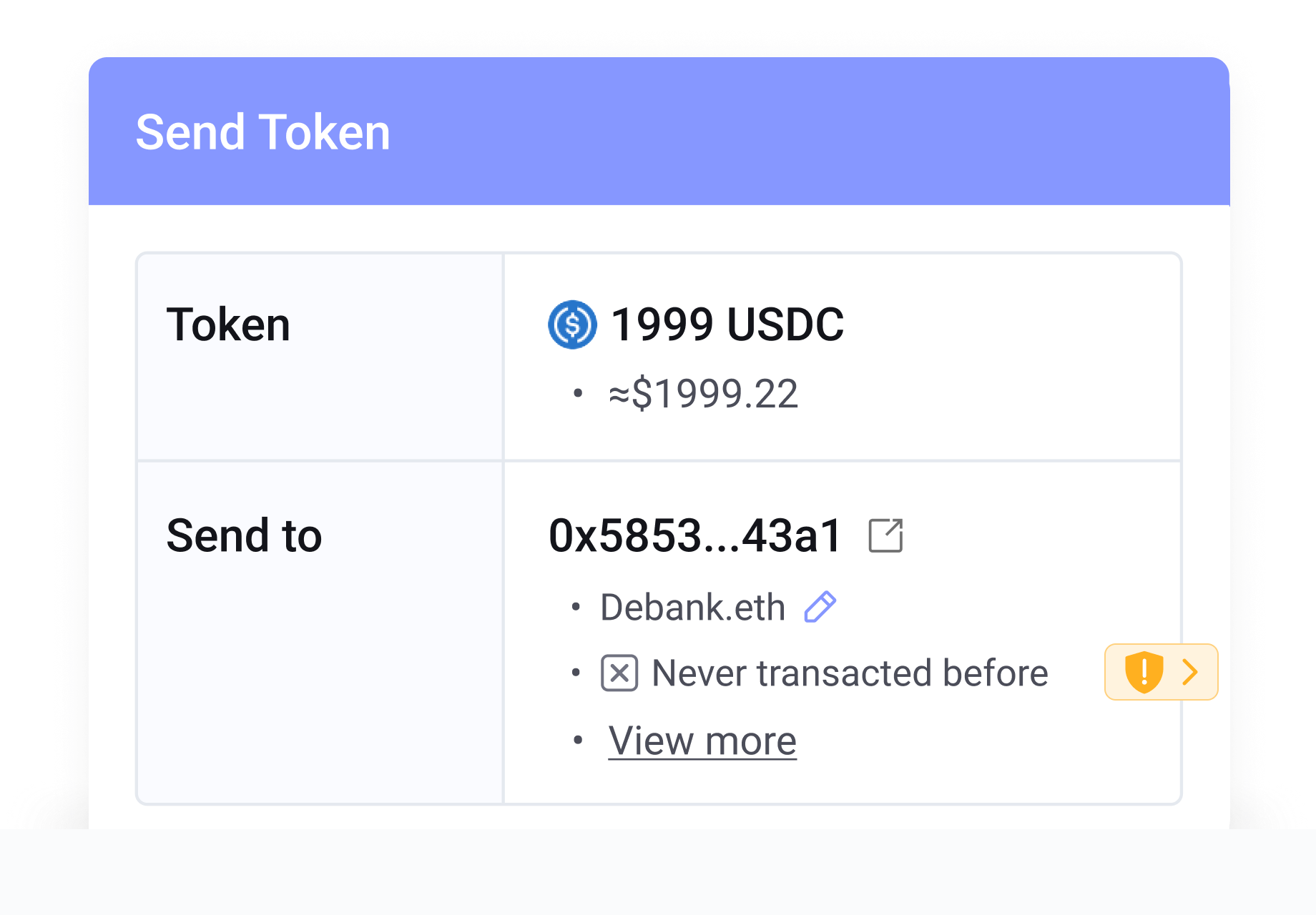
Why transaction simulation matters (and why many wallets miss it)
Short answer: simulations turn guesswork into data. Seriously? Yes. Simulating a swap or contract call tells you probable token flows, slippage outcomes, and revert reasons before you sign. That prevents dumb mistakes, like approving a token with a malicious transferFrom or sending the wrong amount due to slippage math.
Initially I thought simulations were only for devs. Actually, wait—let me rephrase that. I thought simulations were niche. But then I watched a $10k trade fail because of an unnoticed fee-on-transfer token—ugh. On one hand, interfaces show amounts. On the other, they don’t always show side-effects. Rabby’s simulation surfaces those side-effects, so you catch the weird stuff early.
My instinct said “use a hardware wallet always,” and I still think that. Though actually, an integrated extension that plays nicely with hardware devices and adds transaction insights is more useful day-to-day. You want convenience and scrutiny together. Rabby makes that possible by supporting hardware signers and giving you pre-flight details.
Real-world workflow — how I use Rabby in practice
Okay, so here’s my daily routine. I have my Ledger attached for big moves. For quick multi-chain trades, I boot the extension. I glance at the simulation results. If something looks off—like unexpected token approvals or abnormal gas estimates—I abort and dig deeper. It’s a small habit that saved me more than once. Hmm…that habit feels nerdy, but it’s effective.
Sometimes I use Rabby to sandbox complex interactions: multi-hop swaps, cross-chain bridge calls, or DeFi composability stacks that call several contracts. The extension shows each call and whether an internal transfer happens. That clarity – especially across EVM chains – is invaluable. My first impression was skepticism. But repeated use turned skepticism into appreciation.
Oh, and by the way, the UI exposes gas breakdowns and nonce control without making you feel like you’re back in a 2017 gas war. That balance matters—power users shouldn’t have to choose between advanced features and reasonable ergonomics.
Security trade-offs — what Rabby does well and what to watch
Rabby reduces a lot of human risk vectors. It flags popular attack vectors like unlimited allowances and front-running susceptibility. It also separates chain connections in a sane way, so you aren’t accidentally approving on the wrong network. These are small UX choices that have big security implications.
That said, no extension is a silver bullet. Browser extensions have an inherent attack surface. I’m not 100% sure any one extension will remain perfectly safe forever. So: use hardware signing for highest value transactions, keep your extension updated, and audit which sites have active permissions. These are basic but very very important steps. Also—don’t hoard approvals forever; revoke them when you can.
On one hand, Rabby gives excellent pre-flight visibility. On the other, if you treat that visibility like an invitation to be careless, you’ll still get burned. So use the signals wisely.
Installer notes: rabby install tips and gotchas
Installing is straightforward, but a few practical tips from a habitual tinkerer: back up your seed properly and never paste it into websites; verify the extension source in the store; prefer the official site link or well-known repositories when grabbing installers. After installation, adjust site permissions—don’t grant blanket access. Seriously. Limit exposure.
If you’re migrating from another extension, export approvals carefully and reset stale allowances. Rabby makes it easy to see approvals, which is great because most people never check them. My working-through-contradictions moment: I wanted automatic convenience, but then realized manual permission hygiene is more valuable than saving three clicks.
Multi-chain, but sane
DeFi power users often chase chains like a collection hobby. Rabby’s multi-chain support is pragmatic: you switch networks and the UI remains consistent while still surfacing chain-specific nuances. That means you can compare estimated gas on BSC vs Ethereum vs Arbitrum without mental context switching. It helps you decide trade routing and which chain to use for a particular operation.
One caveat: cross-chain bridges still require caution. Simulation across chains is hard because cross-chain state is asynchronous. Use Rabby to check the on-chain calls you can simulate, but recognize the limits when assets travel between L1/L2s. My rule: larger bridge transfers, hardware signer. Small experiments, extension-only—but not with life-changing sums.
FAQ
Is Rabby wallet safe to use with Ledger?
Yes. Rabby supports hardware signers like Ledger, which lets you maintain private keys offline while benefiting from Rabby’s simulation and UX. That combo gives you convenience plus a strong security posture. Still plug in the device and verify every signature on the Ledger screen—always.
How does transaction simulation actually work?
In practice, the wallet runs a dry-run of the transaction on a node (or a local interpreter) to predict state changes, revert reasons, and token flows. It’s not a guarantee, because mempool/front-running and network-specific behavior can change outcomes, but it gives a high-confidence preview that catches common issues.
Can I rely on Rabby for everyday trades?
Absolutely for routine trades and approvals. For ultra-high-value moves, pair it with a hardware signer and maybe a second signer policy or time-delayed multisig. Rabby reduces a lot of the accidental risk, but sound operational security still applies.
So, what’s my final feeling? Excited but cautious. The excitement comes from finally using a tool that respects the complexity of DeFi while keeping day-to-day interactions usable. The caution is just me being a creature of habit—old scars teach you to be careful. If you want a productivity-and-security win without a huge learning curve, try rabby wallet. It won’t fix every problem, but it’ll stop a lot of dumb, preventable mistakes.